

The latest thought leadership, news, events, and more from Woolpert Digital Innovations
How Utilities Can Predict Outages Before They Happen
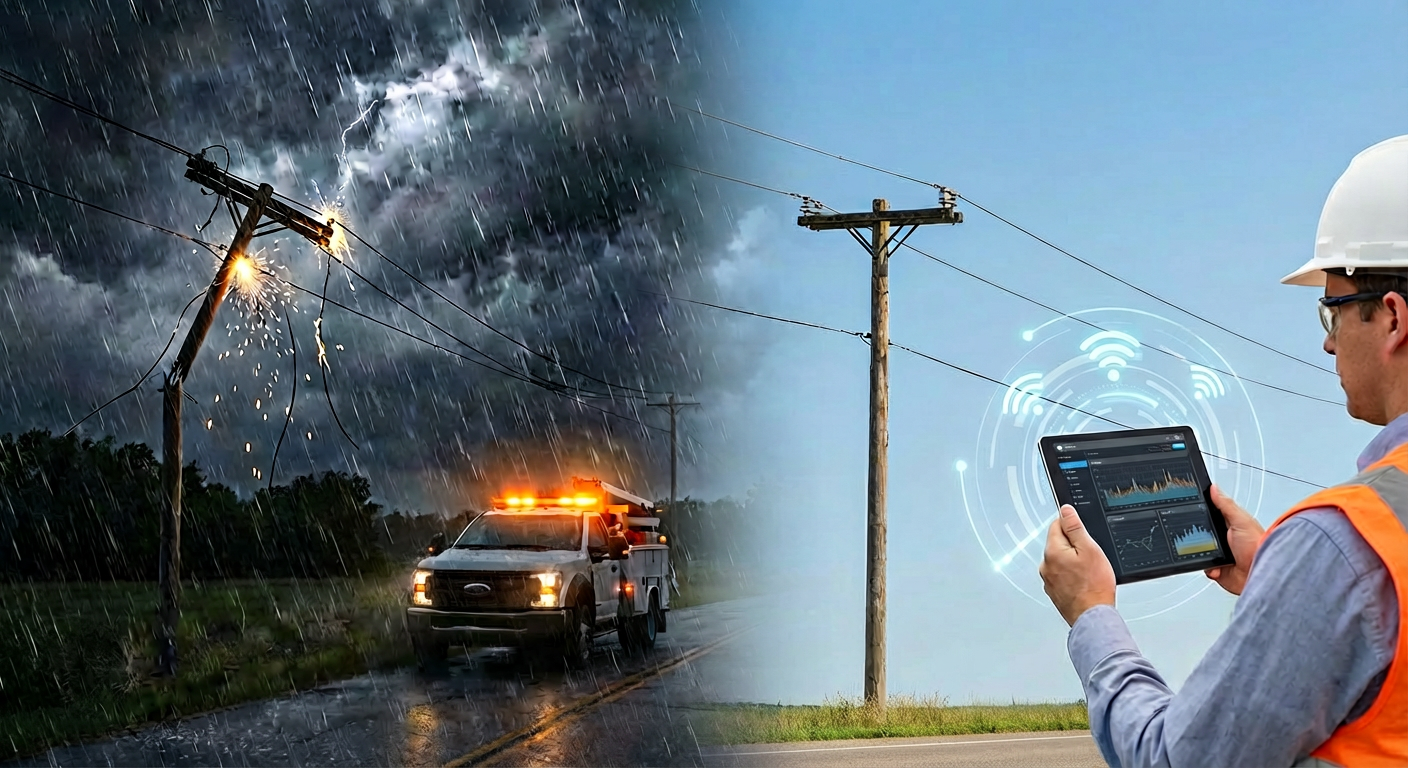
For more than a century, electric utilities have been built around one core responsibility: to restore service as quickly as possible after something goes wrong.
A line goes down. A fused cutout blows. A storm pushes equipment beyond its limits. Crews mobilize, operators isolate the fault, and the work of restoration begins.
The industry has become extremely good at this process. Response times have improved, systems are monitored continuously, and outage management tools are far more sophisticated than they were even a decade ago.
But the conditions surrounding the grid are changing. Infrastructure networks are aging. Severe weather is becoming more frequent. Electrification is adding new demand. Under these conditions, reacting quickly is no longer the full measure of reliability.
The next step is prediction: recognizing the signals that precede failure and acting before service is interrupted. This is a fundamental shift in operational strategy. The financial incentive for this shift is compelling: according to the U.S. Department of Energy, a properly implemented predictive maintenance program can yield a remarkable return on investment of roughly 10 times the cost.
The Grid Produces More Data Than Ever
Modern electrical infrastructure constantly generates operational signals. Substations transmit equipment readings. Line sensors capture voltage behavior. Environmental systems record temperature, wind, and other conditions that affect grid performance. Utilities also maintain extensive records of outages, equipment history, and maintenance activity.
For years, much of this information has been used only after the fact. Engineers review telemetry to understand why an outage occurred, and historical records help explain failure patterns. Viewed together, however, these data sources reveal something more valuable: early indicators of potential problems.
Small voltage irregularities, repeated minor disturbances along a feeder, equipment operating outside its historical range, or environmental stress on specific assets can signal elevated risk. Each signal may appear insignificant on its own. But combined with historical data and geographic context, the patterns become meaningful — and those patterns form the foundation of predictive grid operations.
Moving Beyond Fault Detection
Traditional monitoring systems are designed to detect failures. When equipment crosses a threshold or a line goes down, alerts are triggered and crews respond.
Cloud platforms and advanced analytics expand that capability. They enable utilities to process sensor data alongside historical outages, asset inventories, weather conditions, and geographic information — all within a single analytical environment.
Machine learning models analyze these datasets continuously, identifying combinations of signals that have historically preceded failures. Many utilities now combine these models with IoT sensors and edge devices that stream real-time operational data from substations and line equipment. That live telemetry allows models to evaluate changing conditions across the grid and surface early warning signals — often well before a fault would appear as an official alarm in a traditional monitoring system.
The model’s output isn’t a post-event diagnosis; it’s a predictive cue, an indication that a particular asset, line segment, or region may soon experience trouble. Operations teams receive warnings early enough to intervene.
Until recently, building predictive grid models required specialized data science teams and custom infrastructure. Today, the barrier is much lower.
Modern cloud platforms provide many of the building blocks utilities need out of the box. Data pipelines can automatically ingest telemetry and historical records. Clustering models help identify patterns across similar assets or geographic regions. Time-series analysis tools evaluate how equipment behavior changes over time. Many of these capabilities are now available through managed platforms and prebuilt frameworks that dramatically reduce development time.
This shift means utilities no longer need to assemble predictive systems from scratch. Instead, they can focus on connecting the data they already collect and applying models that surface meaningful operational signals.
Operational Impact in the Field
Predictive insight reshapes how utilities manage the grid.
Dispatch centers begin receiving alerts tied to the emerging risk of future outages, rather than already confirmed outages. Maintenance crews can inspect equipment showing signs of deterioration before it fails. Vegetation management teams can prioritize areas where environmental conditions and asset location combine to create vulnerability.
The benefits extend across the network. Industrial customers experience fewer disruptions. Maintenance schedules become more targeted. Crews spend less time reacting to emergencies and more time addressing problems while systems remain stable.
The operational rhythm changes as well. Instead of cycles of failure and repair, utilities move toward continuous monitoring, intervention, and improvement.
Reliable Data Is the Starting Point
Predictive capabilities depend on a clear, accurate view of the system.
Utilities often possess large volumes of operational information, but it is frequently scattered across different systems. Asset inventories may exist in one platform, while outage records live in another. Sensor feeds may be stored in formats that make large-scale analysis difficult.
Organizing these datasets into a unified structure is the first step toward prediction. This can begin with a targeted pilot project focused on a single problematic feeder. By leveraging outage records and asset data for one circuit, utilities can demonstrate the power of predictive analytics within weeks — building out the business case and internal expertise needed for a wider rollout. A reliable asset map, accessible historical records, and consistent telemetry streams enable the system to evaluate conditions across the entire network.
Once these foundations are in place, the data can begin to reveal meaningful operational signals.
Toward a More Proactive Grid
The technologies required for predictive grid operations have matured rapidly in recent years. Cloud-scale data platforms empower utilities to process large volumes of telemetry in real time. Geospatial systems connect those signals to the physical network. AI models analyze the data continuously, surfacing patterns that indicate elevated risk.
Together, these capabilities change how utilities interact with the grid. Operators gain earlier visibility into emerging issues. Maintenance teams focus their attention on where it will have the greatest impact. Customers experience fewer interruptions because problems are addressed before they escalate.
Reliability Through Insight
Grid reliability has always depended on the knowledge and experience of utility professionals. Predictive analytics adds another layer to that expertise.
Signals that once appeared only after a failure can now be detected earlier. Operational teams receive clearer information about where to focus attention. Resources are deployed more deliberately across the network.
The information required to support these decisions already flows through modern grid infrastructure. With the right systems in place, that information becomes actionable — transforming the way utilities manage reliability and service continuity.
Reliability is no longer just about restoring power; it’s about working to ensure that it never goes out.
If you are ready to move from reacting to predicting, contact the Woolpert Digital Innovations team for a personalized assessment of your grid data. Let us show you the power of a truly predictive grid.